Changes to food waste collections from early 2027
From early 2027, we will introduce weekly food waste collections. This is part of wider changes to our waste and recycling services following the government's Simpler Recycling legislation.
Read this page in:
What the changes mean for you
When collections start:
- your food waste will be collected every week
- your black bin will be collected every 3 weeks
- your bin collection day may change
You do not need to sign up, and the service is at no additional cost to you.
When collections will start
Food waste collections are due to start in early 2027.
Collections will be introduced in phases over 2 weeks, so your start date may vary depending on where you live.
Later this year, the online collection calendar will be updated so you can check:
- when your food waste collections start
- what your new collection day will be
When you will receive your new outdoor food waste caddy
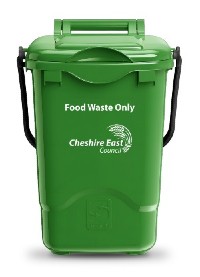
You will receive a new 23-litre outdoor food waste caddy before collections start.
Almost all food waste caddies have now been delivered. We are aware of a small number of reported missed deliveries. These properties will be returned to in time for the new service starting in early 2027.
Find out when your caddy is due to be delivered.
What to do once you receive your caddy
Inside the caddy, you’ll find a leaflet with information about the service and a sticker that tells you what you can put in it. You should:
- read the information in the leaflet
- attach the sticker to the lid of your caddy
- write your address in the space provided on the sticker
Do not put your caddy out for collection yet.
Later this year, you will be able to check when collections start and your new collection day using the online collection calendar.
What you can recycle in your new food waste caddy
You will be able to recycle the same types of food waste in your new caddy that you currently put in your garden bin (if you subscribe to the Garden Waste Recycling Scheme).
See what food waste you can recycle on the current food waste page.
You must not put garden waste in your new food caddy.
Putting your food waste caddy out for collection
On your collection day:
- put your outdoor food waste caddy out for collection (not your indoor kitchen caddy)
- place it at the edge of your property
- make sure it is out by 6.30am
Leave the handle in the upright position so crews can empty it easily.
Do not put food waste in your black bin once collections start.
Return your caddy to your property as soon as possible after it has been emptied or by midnight at the latest on the day of collection.
Looking after your food waste caddy
Your food waste already goes in your black bin. Using a separate caddy will not create additional smells - it keeps food waste separate for recycling.
Keep your caddy clean and fresh
To keep your caddy clean and reduce smells:
- keep the lid closed when not in use to prevent pests
- wash it regularly with warm, soapy water
- store it in a cool, shaded place
Use of caddy liners
You do not need to use a liner in your outdoor caddy.
If you choose to use one, use a fully compostable liner (not plastic), such as plant-based or paper liner certified to EN 13432.
Keeping your caddy secure
Your outdoor food waste caddy has a lockable lid to help keep it secure and prevent pests. To secure your caddy:
- place food waste in the caddy with the handle in the back position
- press the lid down so the tabs lie flat
- move the handle to the front to lock the lid
Using a kitchen caddy
You can use a kitchen caddy or any suitable container to collect food waste before transferring it to your outdoor food waste caddy.
Find out more about kitchen caddies and how to get one.
Do not put your kitchen caddy out for collection. Crews will only empty outdoor food waste caddies.
If you have a garden bin subscription
If you subscribe to the garden waste recycling scheme, your garden bin will continue to be emptied every 2 weeks, except between mid‑December and mid‑January.
On the weeks your garden bin is collected, you can choose to:
- put your food waste in your garden bin, or
- leave your new outdoor food waste caddy out instead
This is because food and garden waste go to the same site to be turned into compost.
What happens to the food waste
Food waste, along with garden waste, is taken to our state-of-the-art facility in Leighton, Crewe where it’s turned into compost for use in agriculture and horticulture. This means that the food waste you recycle has a whole new life supporting farmers and others to grow crops and flowers!
Find out more about how we compost your food and garden waste.
If you live in a flat or shared housing
Residents in flats or shared accommodation will also receive the food waste collection service.
We will assess bin capacity and collection arrangements for each building to make sure the service is suitable and accessible.
Depending on the property, this may involve:
- a kerbside food waste caddy for each flat
- a shared 140-litre food waste wheelie bin for residents - which will be stored in the building's usual bin storage area
Properties with 3 or more flats will usually have a shared bin. These are expected to be delivered in early 2027.
If you need help to put your caddy out
If you already receive an assisted collection, this will continue for your new outdoor food waste caddy.
Most households produce a small amount of food waste each week (typically around 2kg), so the caddy should be light to move. If you do not have a neighbour, family member, or friend who can help you move your bin, you can apply for assisted collection.
If your caddy is lost or damaged
If your outdoor food waste caddy is lost or damaged, you can request a replacement. Requests are managed in the same way as wheelie bin replacements. Read our policy on lost or damaged bins and when charges may apply.
If you would like an extra caddy
You cannot request an extra food waste caddy.
Most households produce a small amount of food waste each week, so one caddy should provide enough space.
We encourage residents to reduce food waste where possible and make the most of the food they buy.
If you do not want to use the food waste service
The government's simpler recycling legislation requires all councils to provide weekly food waste collections.
Because of this, you cannot opt-out of bin deliveries and all households will be provided with an outdoor food waste caddy.
Separate food waste collections help ensure food waste can be recycled by all residents, including those who do not subscribe to the garden waste recycling scheme.
Back to top
Page last reviewed: 08 October 2026
Thank you for your feedback.