Home energy and climate change
How energy generation is contributing to carbon emissions
It is important that we shift towards clean power sources for generation to reduce the amount of carbon emitted.
In 2025, clean sources wind, solar, nuclear produced 63% of energy generation in the UK. By 2030, the UK Government plans for 100% clean power to meet UK’s consumption and for clean power to make up 95% of the UK’s generation.
In Cheshire East, the renewable energy generation capacity has doubled since 2014. In 2024, the capacity was 86.4 MW (megawatts). Within Cheshire East Council’s wider borough action plan, interventions to increase renewable energy supply including accessing public sector funding for this. See below for more information surrounding how you can help decarbonise the energy sector.
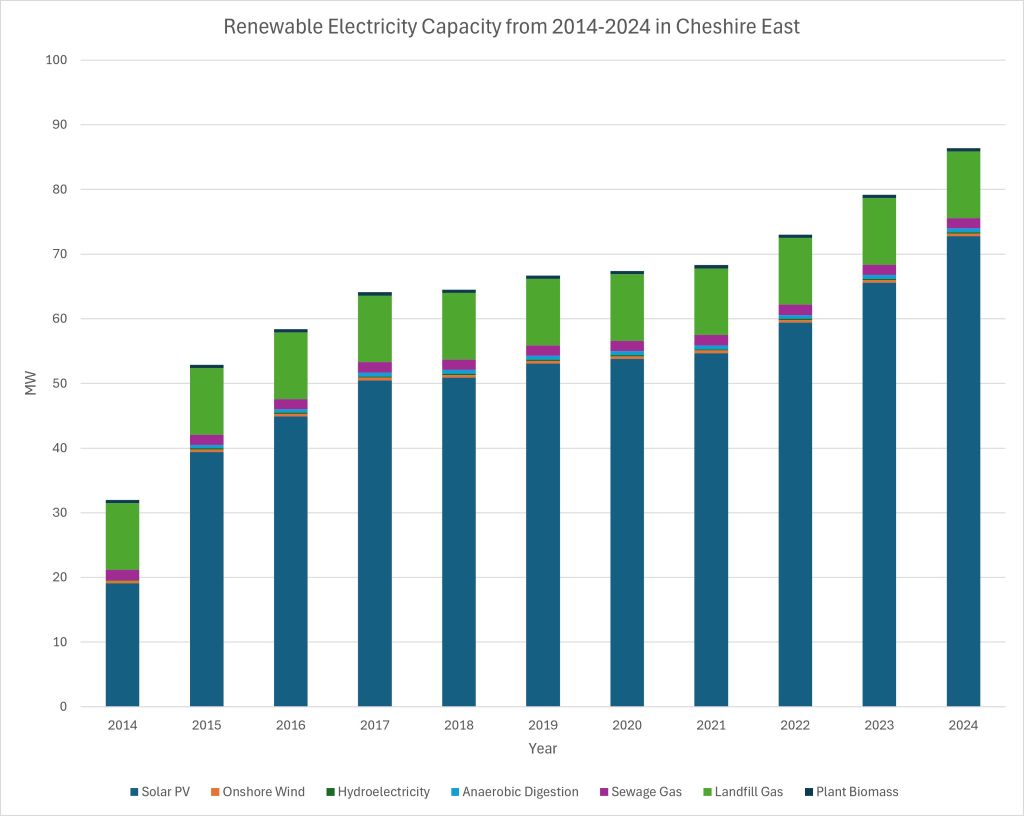
Renewable electricity capacity from 2014 to 2024 in Cheshire East (JPEG, 68KB)
Both domestic and non-domestic buildings equate to 48% of total emissions within the borough. Energy reduction, green tariffs and retrofitting can be applied to both domestic and non-domestic buildings.
Small things to help save electricity
- Switch to LEDs from incandescent bulbs
- Utilise natural light by opening blinds and curtains
- Avoid using a tumble dryer
- Use less hot water
- Don’t leave appliances on standby
- Use appliances such as a dishwasher and washing machine less frequently.
Find out more at the Energy Saving Trust and the Centre for Sustainable Energy.
Change to green tariffs for gas and electric
 By switching to a green energy tariff for gas and electric, this means a proportion or all of your electricity comes from renewable energy sources. This is an important step in decarbonising homes.
Warm homes local grant
The Warm Homes Local Grant funding is available until March 2028 and aims to help improve home insulation and install renewables such as heat pumps and solar panels in homes. The grant is from the Department of Energy Security and Net Zero as part of a national scheme.
Warm Homes Local Grant
Retrofitting
 Retrofitting is the improvement of energy efficiency in buildings. This means that buildings are easier to heat and retain the heat. Examples of retrofitting include insulating homes, replacing gas boilers with electric boilers, installation of air source heat pumps and solar photovoltaics. You may be eligible for funding to help retrofit your home.
Find out more about retrofitting and its benefits.
Page last reviewed: 23 October 2026
Thank you for your feedback.