Aston Village Flooding
Flooding in Aston village – what you need to know
Aston Village is known to experience flooding during periods of heavy rain. Our Lead Local Flood Authority has identified the main cause as surface water (pluvial) flooding. This can happen when rainfall is unable to soak into the ground or drain away effectively. As a result, water can collect on the surface or flow across roads and open areas.
Surface water can be made worse by:
- Ground that is already saturated, particularly during winter months
- Blocked or overwhelmed drainage systems
- Hard surfaces which prevent water from soaking into the ground, such as roads and paved areas
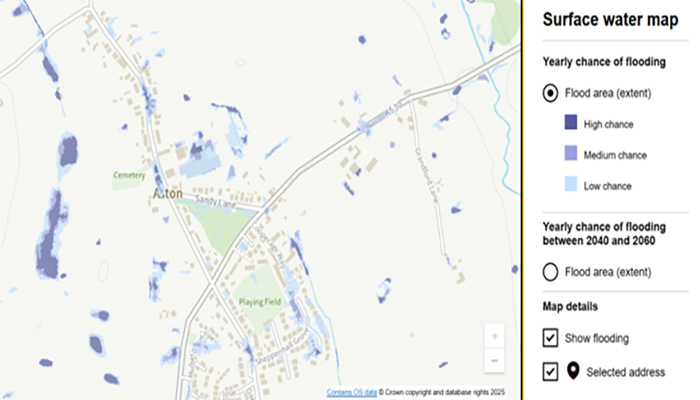
The map below is an extract from the website Check your long-term flood risk. (opens in a new window). It shows the yearly chance of flooding from surface water in and around Aston.
What causes flooding in Aston
Our inspections of the drainage system have helped us build a clearer picture of the situation:
- Minor tree root intrusion was found in some drains, and this has now been cleared
- Surrounding land often becomes waterlogged, causing excess surface water to flow into drains from both roads and nearby fields
- Many watercourses have been culverted (enclosed in pipes), which limits their capacity and makes them more difficult to inspect and maintain
During heavy rainfall these factors can overwhelm the drainage system.
What we've done so far
We’ve taken several steps to reduce flooding and improve drainage:
- Speaking directly with residents to better understand their experiences and concerns
- Carrying out CCTV drainage surveys and high-pressure cleaning to remove debris and improve flow
- Working with local organisations, such as landowners and businesses, to identify opportunities for drainage improvements
- Agreeing next steps with a working group made up of Cheshire East Council, United Utilities, the local Ward Member, and the Parish Council.
- Contacting landowners to remind them of their responsibility to maintain nearby watercourses and providing further information on riparian ownership.
Future action
We’re continuing to investigate and improve the situation. Planned work includes:
- Further drainage inspections using specialist cameras
- Ongoing maintenance and high-pressure jetting to keep drains working effectively
Our role and responsibilities
We investigate all reports of flooding that affect homes, businesses, communities, and essential infrastructure across Cheshire East.
When a flooding event has a significant impact, the Lead Local Flood Authority (LLFA) will carry out a formal flood investigation, known as a Section 19 (S19) investigation.
The investigations that have been published can be found here: Flood Incident Investigations and Reports.
What you can do
Flooding can affect different areas in different ways, so it’s important to understand your own level of risk. Taking small steps now can help reduce the impact of flooding in the future.
We encourage you to:
Responsibilities for managing rivers and watercourses
If you own land or property next to a ditch, stream, or watercourse, you are considered a riparian owner. As a riparian owner you are legally responsible for keeping your watercourse clear and well maintained. This helps water flow freely and reduces the risk of flooding for everyone.
Further guidance on watercourse ownership and flood risk management is available from the Council.
Page last reviewed: 22 July 2026
Thank you for your feedback.