Public Rights of Way
Like a public road, a Public Right of Way is a highway which anybody may use at any time. Public Rights of Way are classified according to the nature of the public's rights along them.
There are four categories of Public Right of Way recorded on the definitive map and Statement, each with different groups of people who may use that category - for further details see the relevant section below:
Public rights of way categories
| Category | Summary of user groups |
|---|
| Public footpath |
Walkers |
| Public bridleway |
Walkers, horse riders, cyclists |
| Restricted byway |
Walkers, horse riders, cyclists, horse-drawn vehicles |
| Byway open to all traffic |
Walkers, horse riders, cyclists, horse-drawn vehicles, motorised vehicles |
There are just over 1900 km of Public Rights of Way in Cheshire East - nearly 1800 km of Public Footpaths and around 150 km of Public Bridleways, Restricted Byways and Byways Open to All Traffic. The Council works closely with both users and landowners to keep the network in good shape for all to enjoy.
Public footpaths 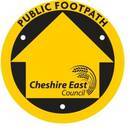
Waymarked with yellow arrows, public footpaths can be used by walkers, including wheelchair users and those pushing prams or pushchairs, although this does not mean that all routes are necessarily accessible for all users. As with all Public Rights of Way, you may also take a dog, although you will need to keep it on a lead or under close control.
There is no right to ride a pushbike along a public footpath, although individual landowners may permit cycling on some routes which are public footpaths, for example on certain sections of canal towpath in the care of the Canal and River Trust.
You should be careful to distinguish between 'public footpaths' and 'footways'. Pavements beside public roads are not public footpaths - it is better to refer to them as footways or simply pavements.
Footways are not recorded on the Definitive Map as Public Rights of Way. A footway is really a part of the main highway which has been set apart for pedestrians.
Public bridleways 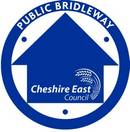
Waymarked with blue arrows, public bridleways are for use by walkers, horse riders and cyclists.
Historically, public bridleways were available for walkers and for horse riders only. The Countryside Act 1968 gave cyclists the right to use public bridleways. However, cyclists are required to give way to both walkers and horse riders. You can also lead a horse along a public bridleway, with these rights also extending to mules and asses but not, for example, to llamas or other animals.
The 1968 Act did not place a duty on highway authorities to maintain public bridleways to a standard suitable for cyclists and so many will not be particularly suitable for cycling. The push in recent years to encourage cycling does mean, however, that more attention is now being paid to the needs of cyclists - provided that improvements for cyclists are not to the disadvantage of horse riders.
Restricted byways 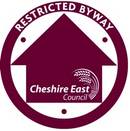
Restricted byways are waymarked with purple arrows and are available for walkers, horse riders, cyclists and horse-drawn vehicles only.
This is a relatively new category of Public Right of Way introduced by the Countryside and Rights of Way (CROW) Act 2000. All routes which, immediately prior to the commencement of the relevant section of the CROW Act on 2nd May 2006, were recorded as Roads Used as Public Paths (or RUPPs), were changed to Restricted Byways.
Byways open to all traffic (BOATs)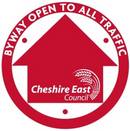
As the name suggests, these routes - often simply called byways - are for walkers, horse riders, cyclists and vehicles - including horse-drawn carriages, motorcycles and other motor vehicles. BOATs are waymarked with red arrows.
The term Byway Open to All Traffic was introduced by the Countryside Act 1968 and refers to certain carriageways (routes available to vehicles) which are used mainly for the purposes for which public footpaths and public bridleways are used, i.e. walking and riding. Members of the public enjoy the same rights on a BOAT as on an ordinary public road, but should not normally expect the route to have a sealed (tarmac) surface.
Public rights and private rights
Be careful to distinguish between Public Rights of Way and private rights of access. The Council does not hold records of private rights of access, wayleaves or easements. Different rules apply - you should seek your own legal advice on such matters.
You are likely to come across a number of other terms being used to describe routes that you want to follow. If you've ever been puzzled by them then find out other terms used to describe routes.
Contact Public Rights of Way
Contact Public Rights of Way
Page last reviewed: 17 October 2023
Thank you for your feedback.